
Most people picture an interior designer choosing paint colors, sofas and lamps. That’s part of the job. But a good designer also does something less visible: they plan how a room will be used. Where you’ll walk, where things will land, what happens when five people need the same counter at 7:30 in the morning.
A functional interior designer puts that question first.
Why rooms stop working
Homes are usually planned around how they’ll look, how they’ll sell, or how we think we should live. Then real routines move in, and the room pushes back. The same pile comes back every day. A closet is full but nobody can find anything. Mornings feel like an obstacle course.
It’s tempting to blame the people. Usually the room is the problem.
What a functional interior designer looks at
Flow: how people move through the room, and where they get stuck. Reach: whether everyday things are easy to grab and, just as important, easy to put back. Transitions: what happens at the door, after school, at bedtime, when one activity ends and the next begins. And the people: who actually lives here, their heights, their habits, their ages, their needs.
What it looks like in real life
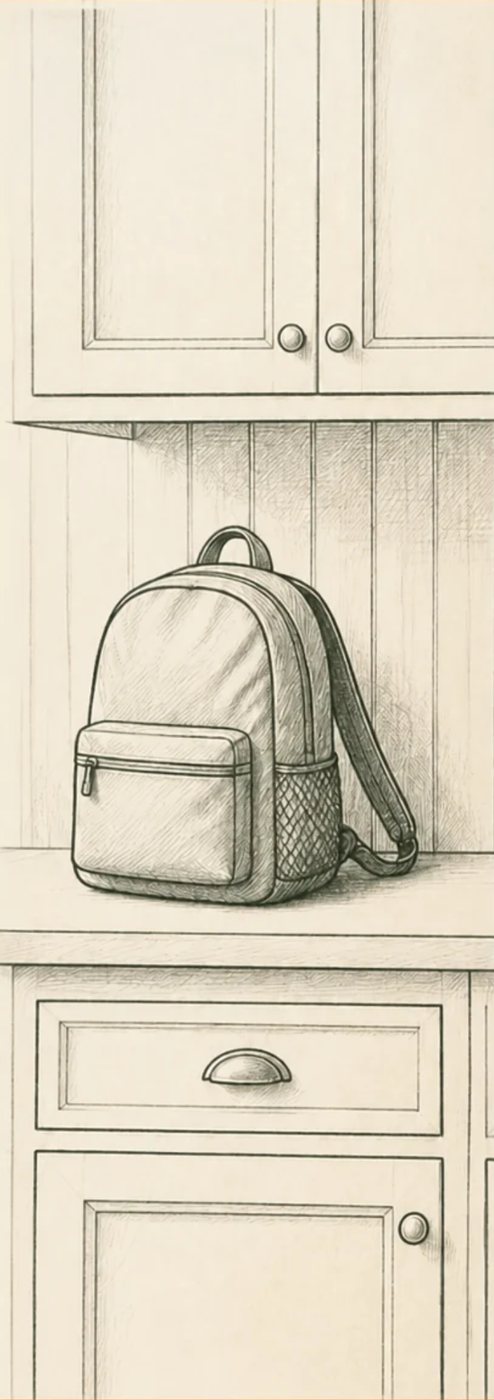
The entry: hooks moved to the first three steps inside the door, at a child’s height, and the backpack stops landing on the counter. Laundry: a folding surface next to the dryer and one basket per person, so clean clothes stop living in the basket. The living room: a low storage unit where the kids actually play, so the walkway stays clear. The dining room: a bench instead of chairs, with always room for one more and nothing blocking the path.
Beautiful and functional, not one or the other
Function doesn’t mean giving up on beauty. The best rooms do both. They look calm because everything has a place, and they stay that way because the place makes sense.
Where to start
If one room in your home keeps going wrong, start there. A Functional Home Audit looks at that room with you, finds why it keeps happening, and gives you a clear plan for what to change first.